
Your prospects are everywhere. They are looking to spend. And you have no idea who they are.
View the Substack edition and join the email list for future posts.
How many iGaming B2C operators are there?
Not holding companies. Not brands. Operators.
Distinct business entities – online casinos, sportsbooks, lotteries, poker, bingo – the buyers for your iGaming B2B software, content, payments, licensing, or services.
You’re looking to grow your business by getting more customers through the door. That means finding them and winning them over before the competition does.
But how big is the pool?
If you ask your favorite AI how many operators are in the world, you’ll quickly learn that, as of 2025, there are 4,627 of them.
But that number only represents the licensed, listed, regulated operators.
Getting the total number is trickier. Germany has 11 unregulated operators for every regulated one. Vietnam has up to 100. Industry veterans estimate the global ratio at x4 to x10.
That puts the market at 20,000 to 50,000 operators. Less than 5,000 of them known.
There is no definitive list of all operators in the industry. The vast majority of your potential customer pool is in the dark.
A void.
Sales is one-to-one. Handshakes, relationships, personal trust built over time. Marketing is one-to-many. Spreading the word, creating trust at scale, reaching people you’ve never met.
It’s one of the fundamental distinctions in B2B go-to-market strategy: when your customers are known and affordable to reach, use sales. When they’re unknown, you need them to come to you. Use marketing. And brand.
With 4,627 licensed operators, you theoretically have a clear set of targets you can approach. But when it comes to the unlisted, you’re reaching into the void.
And even if you only target licensed operators, that list is more fluid than you think. Operators close, rebrand, merge, and open shop every few months. The “known” market behaves like an unknown one over time.
Your prospects are everywhere. They are looking to spend. And you have no idea who they are.
How do you get a feel for whether 20,000 to 50,000 is a lot?
There are roughly 100,000 self-service laundromats around the world, almost as many operators as there are self-service laundromats.
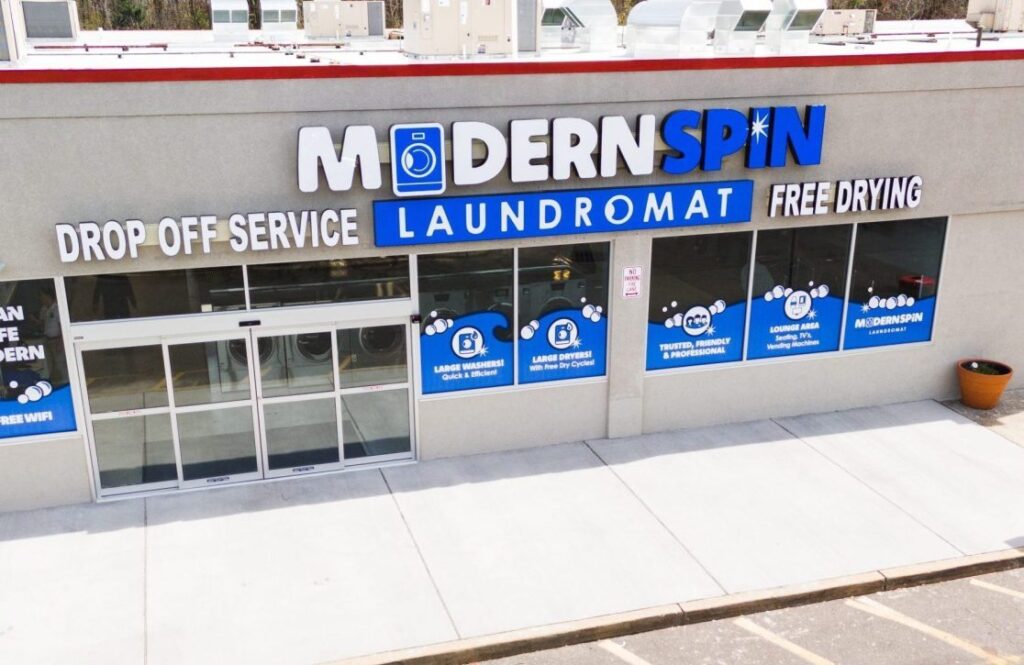
But unlike laundromats, they are unknown. Unlike laundromats, each has a serious budget to spend. And unlike laundromats, many don’t last long. With the market expected to double in size in the next few years, the pool keeps growing and drawing new ones in.
Your prospects are everywhere. They are looking to spend. And you have no idea who they are.
They are walking past your booth or skimming your website right now. And you’re trying to cover that void one handshake at a time. Checking who’s in the market to buy, who’s the right fit. It’s slow, it’s expensive, and it doesn’t scale.
You need them to come to you. That’s the job of marketing and brand. Not sales.
But only if you have a story worth telling.
Here are 4 problems I keep seeing across the market when you don’t have a story to tell.
And even if they had the time, they’re too close. It’s hard to look at your own brand with fresh eyes when you’ve been in the trenches for years. What makes you different might be lost on you, or easy to miss. Brand strategy is part art, part science. It’s an expertise built across companies, not within them. You can’t do this in-house, and it doesn’t make sense to try.
These problems compound. And they don’t get better on their own. They can, however, be solved.
Understaffed, stuck in execution mode. Used as an extension of sales. Every minute not spent on the next event is a missed handshake.
A distinctive story travels into the void where your sales team can’t reach. It pulls the right prospects toward you.
With a story that stands out, you’re no longer invisible. The right operators find you. Acquisition costs go down, conversions get faster, and customer lifetime value goes up. Your budget goes further because you’re not shouting the same thing as everyone else, hoping someone will bite. You’re targeting with precision, with messaging that hits home. And because your story carries an emotional payload, trust arrives before the first meeting.
But a story only works if it’s built on strategy and deep insight.
Who are the operators your solution is most suitable for? What’s in it for them? What does success look like?
David Ogilvy, the father of advertising, said, “The public is not a standing army; it is a moving parade”. Your prospects aren’t waiting for you. They are bombarded by thousands of other marketing messages, generic and loud, drowning in the noise. Your story needs to grab their attention and stop them in their tracks.
What would excite them into action? What would stop them from scrolling? What staying power does your story command?
And a story that stops them once isn’t enough. Told once, it’s like a dress without a ball. Nice in the drawer, but shines in the spotlight. A story told once is PR. Spread consistently, it’s brand.
Your prospects are out there. All around you. Unknown. With serious budgets and open for business. Your story is how they find you.
HaArba'a St 28, Tel Aviv-Yafo
© Copyright 2025 by Braintail