Optimove, fast track, and Symplify can afford to make mistakes others can't
View the Substack edition and join the email list for future posts.
There’s a very short time window when operators are open to buying a new CRM. The big names in the industry have the brand and spend to get considered every time, but you don’t. You need to work smarter to be remembered when that time comes.
But how do you get remembered without the brand awareness and deep pockets?
Imagine walking into a casino and having your own personal guide. Someone who rolls out the red carpet just for you. Someone who knows your favorite games, encourages your next bet, spots your frustration before you walk away and hands you a timely bonus, introduces a new game you’ll probably like, solves a deposit hiccup, and pulls you back from risky behavior.
In a land-based casino, that’s impractical. You can’t assign a personal guide to every guest. In an online casino it’s not only possible, but every casino manager’s dream. And while we’re still far from making the dream come true, it’s easier to imagine than ever before thanks to recent advancements in tech and AI.
No component in the casino stack gets closer to making that dream real than the CRM. So far, CRMs have allowed human operators to tailor experiences, set triggers and responses, create player segments, and automate journeys at scale. Not quite the vision of a personal casino guide, but as close as tech allowed at each step of the way.
Optimove, fast track, and Symplify are major players in the iGaming CRM space. They are the enterprise-grade CRMs that large operators turn to when they outgrow basic solutions. The most powerful, the most capable, and the most recognized names in the space.
Selling CRM is a matter of timing.
A CRM is the core of the business, the heart of the casino. It holds the data, manages the player relationship, and runs the operation. Everything else integrates through it. Replacing your core isn’t something that happens every day or gets decided lightly.
Enterprise-grade CRM contracts run for two to four years. That means that only a small fraction of your potential buyers are actively looking to buy in any given month. You have no way of knowing who or when, so you have to be actively present in the market, investing in awareness and nurturing rather than performance and ads. The cost of acquiring a new customer is high, but so is the lifetime value once you land them.
Operators are receptive to switching their CRM months before a contract is up. They’ll reach out to the brands they remember, the ones they recognize as a good fit. If you’re not already top of mind, you won’t be invited to the party.
Optimove, fast track, and Symplify have something most CRM brands don’t: the deep pockets to always be present. Always at events, always in the conversation, always visible. The market already knows them and has a strong perception of what each one does, regardless of what their website says.
But does the same apply to you? If you’re a lesser-known brand in this market, you can’t afford to be as loud and omnipresent. You have to be more deliberate. More precise. Your narrative has to do the heavy lifting, making you memorable and relatable to the right operators long before they start looking.
You can’t afford to be as loud and omnipresent. You have to be more deliberate. More precise. Your narrative has to do the heavy lifting, making you memorable and relatable to the right operators long before they start looking.
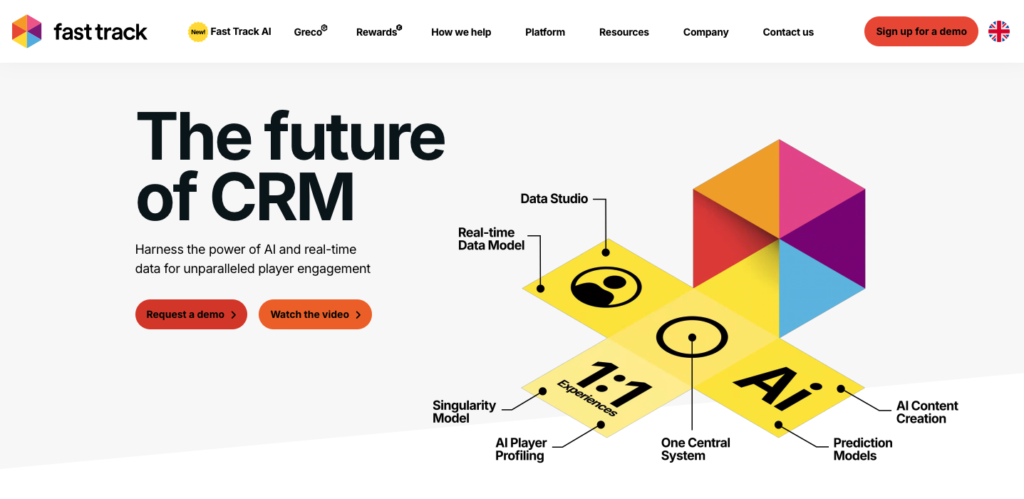
fast track isn’t the only one claiming to be “the future of CRM”. It’s a bold headline, but it says nothing. What future? Whose future? How does it help me engage and retain players?
“The future of” is the kind of claim that sounds big but means little. It’s easy to say, impossible to own, and handful of CRMs are already fighting over it. It doesn’t tell operators how their players’ experience will improve, how their team will work differently, or why this CRM gets them closer to the dream.
If you’re a lesser-known brand, this is a trap to avoid. “The future of” is a placeholder for companies that haven’t done the work of articulating what they actually stand for. It invites no recall, no differentiation, and no reason to choose you.
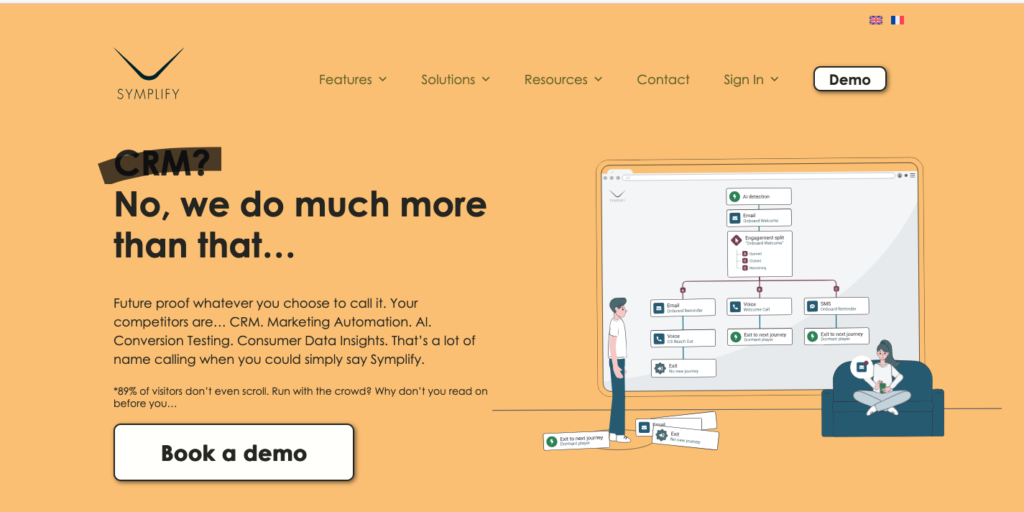
Symplify opens with “CRM? No, we do much more than that”. It’s self-aware, but it leaves the reader with a question instead of an answer. If you’re not a CRM, then what are you?
The hero section is when visitors are at peak attention. Rather than hit while the iron is hot with a clear message of who they are, Symplify opens with a riddle that demands cognitive effort. Instead of serving clarity when the visitor is most receptive, they send them searching for answers.
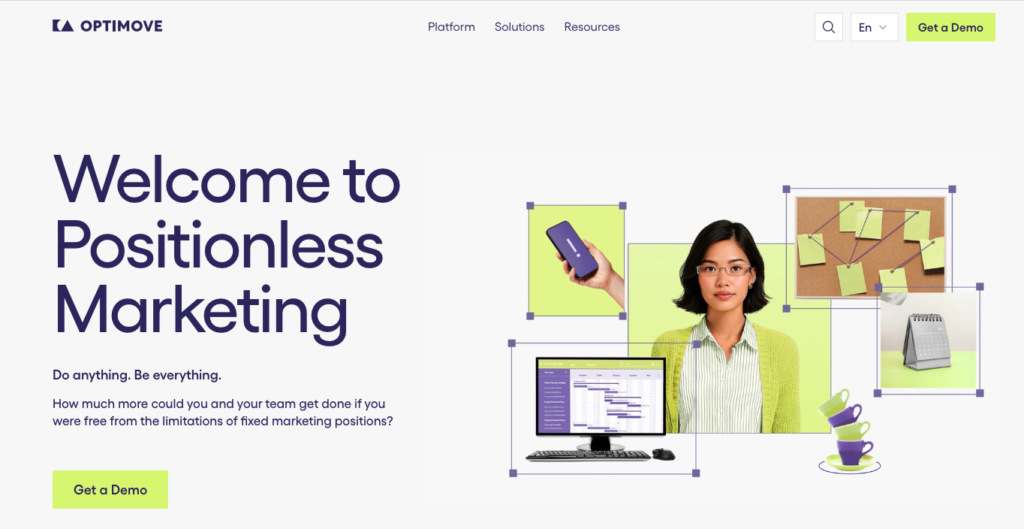
Optimove leads with “Positionless Marketing”. It’s a coined concept that borrows from sports, where a positionless player can play any role on the team. Applied to marketing, it means any marketer can do anything: create, target, execute, and measure without depending on specialists or data teams.
It’s a clever idea. But it’s an idea that needs explaining, and if your headline needs explaining, it’s not doing its job. How does positionless marketing translate into something operators care about? Does it drive hiring costs down? Speed up marketing teams? Help me curate better player experiences? Other than a vague “do more”, the text doesn’t say.
Optimove has been in the industry long enough for the market to already have a strong impression of what it does. When people talk about Optimove with their peers, they don’t say “positionless marketing”. They describe how it affects their business.
Optimove’s brand is strong enough to carry this cognitive gap. Your brand probably isn’t. Closing these gaps is one of the easiest ways to win trust in the buyer’s journey. Don’t waste it. If prospects need to Google your headline to understand what you’re offering, you’ve missed the opportunity.
Closing these gaps is one of the easiest ways to win trust in the buyer’s journey. Don’t waste it. If prospects need to Google your headline to understand what you’re offering, you’ve missed the opportunity.
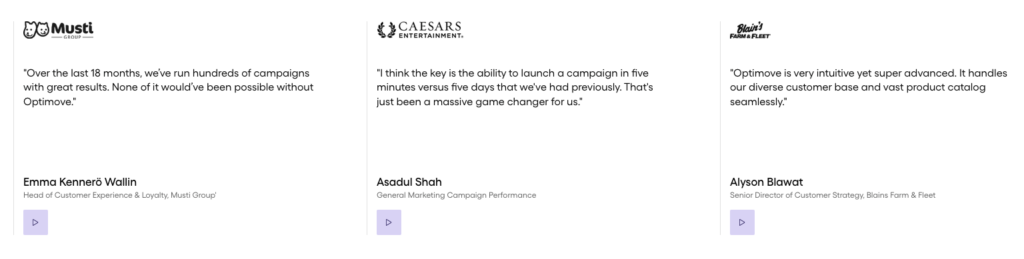
Optimove’s own testimonials highlight a common gap between what a brand tells the market and how the market actually perceives it. Customers consistently describe doing more complex work with smaller teams in less time. Not positionless marketing, but productivity gains.
The problem is that productivity claims are generic. The same testimonials could have been written about any of Optimove’s competitors, and you wouldn’t be able to tell the difference. Doing more with less is valuable, but it’s not distinctive.
Optimove can get away with this because the market already knows what it stands for. Lesser-known brands can’t. You have to be precise about what you are, who you’re for, and how you’re different. Generic benefits won’t stick in anyone’s memory.
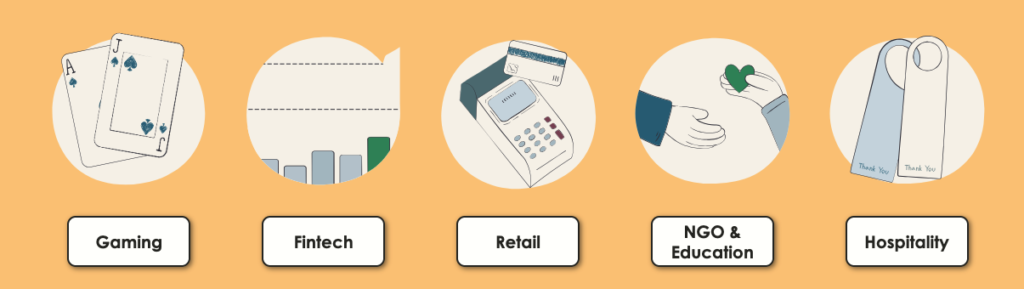
fast track serves iGaming and nothing else. Optimove and Symplify cater mainly to iGaming but also serve other industries. All three are already recognized as iGaming CRMs, so for them this distinction barely matters.
For lesser-known brands, it matters a lot. The more prospects can see themselves in your messaging, the more trust it creates. A cybersecurity platform for fintech startups has better chances of attracting fintech founders than ‘just’ a cybersecurity platform. The same applies to CRMs.
In a market where competition is fierce and acquisition costs are high, you need every edge you can get. If your CRM serves multiple industries but iGaming is your primary market, consider spinning off a separate brand for the other verticals. Keep your main brand focused on iGaming. The investment in a sub-brand is significant, but full focus on iGaming reduces acquisition costs and increases trust in a market where both matter enormously.
The big three have the spend and brand awareness to serve multiple industries under one roof and still win. You probably don’t. Focus wins trust. And trust wins deals.
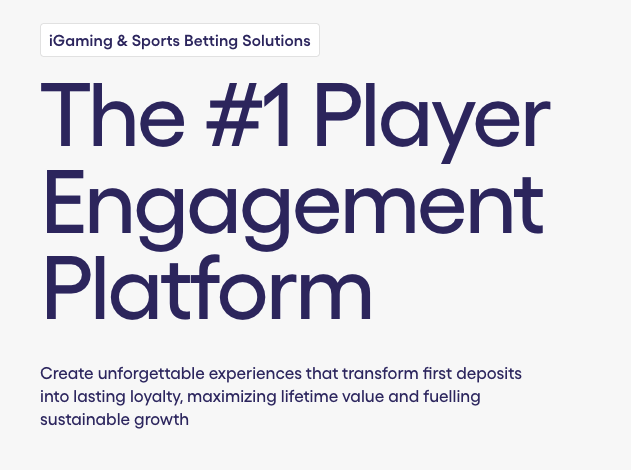
Optimove refers to itself as the “#1 Engagement Platform”. But #1 by what measure? For whom? In what context?
Claiming to be number one means you’re playing by someone else’s rules. It invites the prospect to compare you on criteria you don’t control. What’s the #1 casino platform? There’s no such thing. It depends on the operator’s goals, geography, and scale. The same applies to CRMs.
Different is better than better. The goal is to own a positioning that reflects your worldview and unfair advantage, and attract the right customers to you. Claiming #1 is a lazy move. The big ones can get away with it. You have to do better if you want to be remembered.
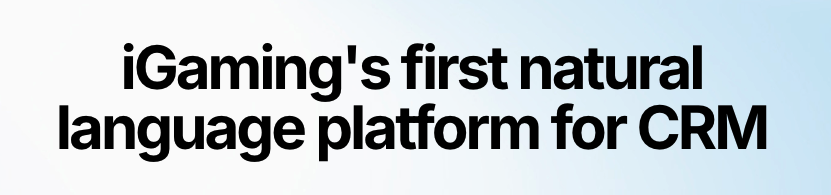
fast track’s natural language interface lets operators “vibe CRM” their way through campaigns by simply typing what they want. It’s impressive, and it’s a real differentiator today. But for how long? AI is leveling the playing field faster than ever. A natural language interface that feels groundbreaking now could be table stakes within a year.
The same applies to real-time data architecture. Collecting, processing, storing, and analyzing every player move at scale to infer meaningful insights is a serious technical challenge. Today, that’s a moat. Tomorrow, it might not be.
The big three can serve enterprise operators thanks to their tech edge. But what happens when smaller CRMs close the gap?
fast track’s Singularity model is the closest any CRM gets to the dream of a personal guide for every player. That’s not just a feature, it could be a philosophy. But Optimove’s micro-segmentation can theoretically get there too. The real edge isn’t the technology itself. It’s the data, models, expertise, and compute behind it. These are harder to replicate than any interface. But even these advantages have a shelf life. If your story is built on tech alone, you’re one innovation cycle away from losing your position. You can’t win without technology, but you can’t win with technology alone. You must have a memorable narrative. You must have a strong brand.
You can’t win without technology, but you can’t win with technology alone. You must have a memorable narrative. You must have a strong brand.
Each of the big three has a distinct identity, even if their hero sections don’t reflect it. Symplify is the self-contained CRM: all channels integrated, Scandinavian simplicity in design, easy enough to operate in-house without outside consultants, built around automation and scale. fast track is about 1:1 experiences, with the real-time data architecture and AI to deliver them. Optimove lets data-rich operators put AI in the driver’s seat, optimizing the journeys players go through.
Each is rich in resources and brand equity. They can afford a hero section that doesn’t fully capture what makes them different. The market already knows.
But if you’re a CRM in this space and want to be remembered when that contract finally comes up for renewal, you have to do better. You have to be sharp, memorable, and impossible to confuse with anyone else.
Because when that window opens, they either remember you or they don’t.
HaArba'a St 28, Tel Aviv-Yafo
© Copyright 2025 by Braintail