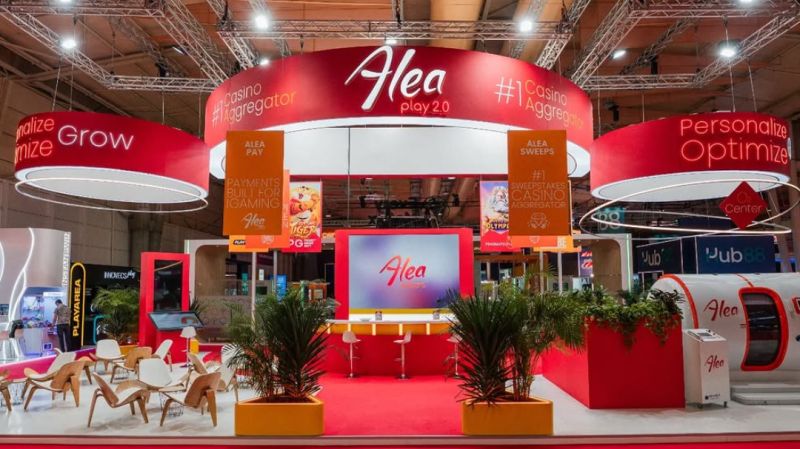
This post was originally published on October 28, 2025, on LinkedIn. It triggered a discussion that did not escape the attention of Alea’s leadership. Alex Tomich, Alea’s founder, reposted it with his own comment and touching story the same day. LinkedIn loves such controversy, and rewarded it with massive exposure. Alex and I met in person at SiGMA Rome the following week, a brief on that meeting can be found here.
View the Substack edition and join the email list for future posts.
You’re not Alea. You don’t have the budget to be as flashy and loud.
But you also don’t have to, because Alea’s strategy has a flaw that you can use to your advantage.
Alea is a leading game aggregator that stands out thanks to deep pockets and huge marketing budgets. Their visibility comes from flashy booths, oxygen bars, hyperbaric chambers, and a charismatic, founder-led brand.
In a market where everyone looks and feels the same, being loud is a winning strategy. And it works. Alea became impossible to ignore. But that kind of attention comes at a cost not every company can (or should) pay.
Here’s the flaw:
Strip away the marketing budget and founder persona, and Alea’s core value proposition looks like everyone else’s. Thousands of games? Others have that too. Secure and reliable API? Table stakes. Fast integration? Every aggregator claims it.
If you can’t afford to be as loud as Alea, you can still win. By standing out and being different.
To win market share, you’ll have to be very clear about how you’re different. You don’t need to be known by everyone. You need to be noticed and remembered by a specific audience for a specific reason.
Alea proves you can win with volume. But for everyone else, the strategy must be different. Find one thing your product does that changes operator behavior or economics, then make that the only thing people remember about you.
Alea spent millions to be memorable for being loud. You need to be memorable for mattering.